Our Campus Don Sabi Their Sexual and Reproductive Health and Rights
 Admin
AdminConversations about our sexual and reproductive health and rights are not things people, especially the young ones (Genz) want to openly discuss and if they do most young people don’t have the right knowledge about their sexual and reproductive health and rights, therefore, exchange wrong or erroneous information among their peers..
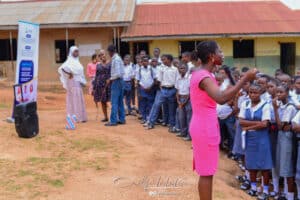
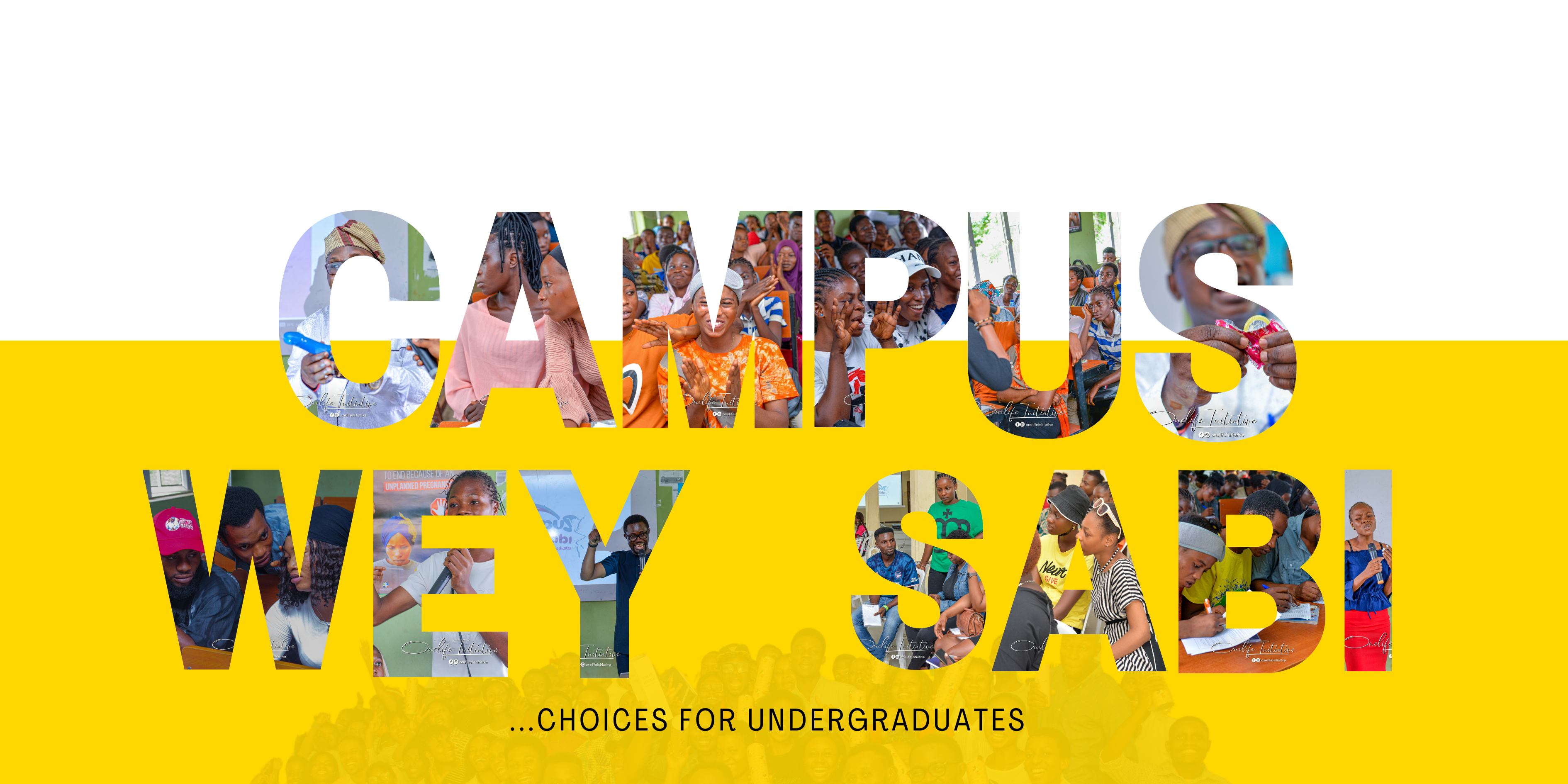
Campus Wey Sabi provided 601 Undergraduate Students in 2 Nigerian States who are mostly resident off-campus with Sexual and Reproductive Health and Rights information. The focus on off-campus undergraduate students was following the findings that most campuses with non-residential options/limited on-campus options leave the undergraduate students with no option but to seek accommodation outside of the campus. This freedom to cohabit many times lead young people to engage in various forms of sexual activity and leading to issues of unintended pregnancies and other sexually transmitted infections among young people.
Oyo and Akwa Ibom states were our areas of focus for this project, we worked with some of the institutions within each state. The students and bodies within the institutions were engaging and clamoring for more programs like this. We have worked with diverse stakeholders to reach 432 female undergraduate students, 178 male undergraduate Students in 4 universities, 4 polytechnics, 3 Colleges of Education, and 1 Monotechnic.
Some of our focus for the Campus Wey Sabi project is to talk to young people in higher institutions about their knowledge of contraceptives, risky sexual behaviour, menstrual health hygiene and management, options for unplanned pregnancies, sexual and reproductive health, and rights.
In the course of the training we carried out a baseline survey to test their knowledge on their sexual and reproductive health and rights, They were taught how to calculate their menstrual cycle, their safe period, different contraceptive options, policies around sexual and reproductive health, and a lot more.
After the seminar, an endline survey was carried out and this showed that many attendees had more knowledge about their sexual and reproductive health and rights. Many of the students became our word of mouth because they told their friends about the things learned, and how the knowledge has made them better.
In the course of the campus wey Sabi program the participants were introduced to PPMVs in each state and within a few distances of the institution, who were previously trained and equipped with the right knowledge on SRHR, and taught how to best handle people with an unplanned pregnancy to carry out a safe abortion, how to administered contraceptives, the kind of SRHR counsel to give people when come around. This made the participants know that they have access to trained PPMVs around.
The project was enlightening for our participants. They were not just excited about the knowledge and skills gained, but also deeply motivated by the overall experience. We’re grateful to our partners Ipas whose support made the success of this project possible.